


Does Coffee Bloom Time Affect Taste? A Brewing Guide
Table of Contents
- What Is Coffee Bloom and Why It Matters
- How Carbon Dioxide Release Affects Flavor During Brewing
- The Ideal Coffee Bloom Time for Best Results
- How to Bloom Coffee for Pour Over Methods
- Impact of Bloom on Acidity and Flavor Clarity
- Roast Level, Freshness, and Bloom Duration
- Common Bloom Mistakes That Hurt Your Cup
- Frequently Asked Questions
Last Updated: September 24, 2026
What Is Coffee Bloom and Why It Matters
Coffee bloom is the initial phase of brewing when hot water first contacts freshly ground coffee, and understanding does coffee bloom time affect taste is essential to mastering extraction. The grounds release carbon dioxide (CO2) and other gases, causing them to expand and bubble visibly. This happens in the first 30-45 seconds of brewing and is one of the most important steps in extraction.
The bloom phase directly affects water penetration, which is why does coffee bloom time affect taste remains one of the most important questions in specialty coffee brewing. When CO2 escapes, water reaches more flavor compounds. Without proper bloom, water channels unevenly, leaving some areas over-extracted and others under-extracted, creating muddled, unbalanced flavor.
Fresh coffee blooms more dramatically than stale coffee. Beans roasted two weeks ago bloom aggressively; beans from three months ago barely bubble. Fresher beans have more CO2 trapped inside and more volatile flavor compounds waiting to be extracted.
How Carbon Dioxide Release Affects Flavor During Brewing
Carbon dioxide signals that flavor compounds are still present. When CO2 escapes during bloom, it carries aromatic compounds, visible as bubbling and detectable as intensifying aroma.
CO2 physically blocks water from reaching soluble compounds. Once that gas escapes, water can dissolve more of the coffee's oils, acids, and sugars, the extraction process that creates flavor.
Water Temperature's Role in Degassing Speed
Water temperature directly affects how fast CO2 escapes and how efficiently water dissolves flavor compounds during bloom.
At 195°F, bloom takes 50-60 seconds as cooler water releases CO2 gradually. At 205°F, the same coffee degasses in 30-40 seconds as hotter water penetrates more aggressively.
Temperature changes what compounds water can access. A 195°F bloom at 30 seconds tastes sour and thin; the same coffee at 205°F and 30 seconds tastes balanced because hotter water accelerates CO2 release.
If your water is below 200°F, extend bloom to 50-60 seconds. If it's 205°F or hotter, shorten bloom to 30-35 seconds. A simple instant-read thermometer is the fastest way to diagnose whether water temperature is causing sour or muddy coffee.
Roast Profile and Degassing Rate
Roast level controls degassing speed independently of water temperature. Dark roasts release CO2 faster (20-25 seconds) than light roasts (45-50 seconds) because roasting creates a more porous bean structure. Using the same bloom time for both produces different results: dark roasts over-bloom and taste flat; light roasts under-bloom and taste sour.
The combination of roast level and water temperature determines optimal bloom time. A light roast at 195°F needs 50-60 seconds; a dark roast at 205°F needs 25-30 seconds. Matching both variables separates average brewing from excellent brewing.
The Ideal Coffee Bloom Time for Best Results
The ideal bloom time is typically 30-45 seconds, allowing bulk CO2 escape while preventing over-extraction before the main brew phase.
Ideal bloom time depends on freshness. Freshly roasted coffee (0-2 weeks) benefits from 45-60 seconds; older coffee (3+ weeks) needs only 30 seconds because less CO2 remains.
Water temperature shifts timing: 195°F requires 45-50 seconds; 205°F requires 30-35 seconds.
Use twice the weight of coffee in water during bloom. For 20 grams of coffee, pour 40 grams of water. This saturates grounds without over-wetting them.
| Roast Level | Bloom Time | Water Temp | Bloom Ratio |
|---|---|---|---|
| Light (0-2 weeks old) | 45-60 seconds | 195-200°F | 1:2 |
| Medium (2-4 weeks old) | 35-45 seconds | 200-203°F | 1:2 |
| Dark (any age) | 25-35 seconds | 203-207°F | 1:2 |
How to Bloom Coffee for Pour Over Methods
Pour-over brewing is where bloom control matters most because you're manually managing water contact. Here's how to execute a proper bloom:
Step 1: Grind your coffee just before brewing. Use a medium-fine grind. Consistency matters more than perfection.
Step 2: Place your filter and grounds in the dripper. Wet the filter first with hot water to remove paper dust and preheat the dripper. Add your ground coffee and level the bed gently with your finger or a spoon.
Step 3: Pour water slowly in a circular motion. Use about twice the weight of the coffee in water, pouring over 10-15 seconds. You should see immediate bubbling as CO2 escapes.
Step 4: Wait 30-45 seconds without pouring. This is the critical window. Resist the urge to pour more water. Let the grounds rest and continue degassing. You'll see the bubbling slow and eventually stop.
AeroPress Original Portable Coffee Maker →
Step 5: Begin your main pour. After bloom, pour the remaining water in slow, steady circles. Maintain an even water level in the dripper. This second phase extracts the dissolved flavor compounds that bloom prepared.
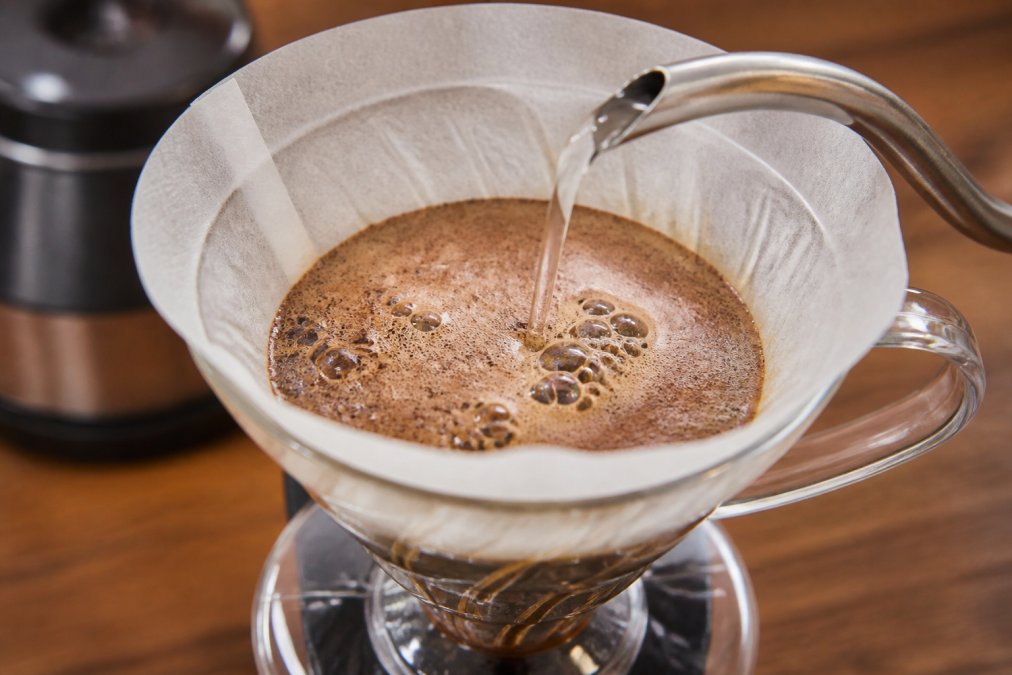
The entire pour-over process takes 3-4 minutes; bloom accounts for the first 45 seconds and pays off in cup clarity and balance.
Bloom Timing for French Press and AeroPress
French Press bloom: Add hot water to saturate grounds, stir gently, and wait 30-45 seconds before adding remaining water. This allows CO2 to escape and prevents grounds from floating. Without bloom, grounds clump unevenly, creating a muddy, inconsistent cup.
AeroPress bloom: Add ground coffee and about 50 grams of hot water, stir gently, and wait 30-40 seconds. This allows CO2 to escape before adding remaining water and applying pressure. Skipping bloom results in over-extraction and a bitter, astringent cup.
The key difference: pour-over bloom is about managing water flow through a bed of grounds. French press and AeroPress bloom is about ensuring even saturation and CO2 release before the main extraction phase. The timing is similar (30-45 seconds), but the mechanism is different. Understanding this distinction helps you apply bloom principles to whatever brewing method you use.
Impact of Bloom on Acidity and Flavor Clarity
Bloom directly controls how much acidity and brightness appear in your final cup. Here's why: acidity compounds are among the first compounds that water extracts from coffee. If your bloom is too short, water hits the grounds unprepared, and acidity extraction becomes uneven, some areas over-extracted, others under-extracted.
A proper bloom creates saturation. All the grounds get wet at roughly the same time. When the main brew phase begins, water can extract acidity evenly across the entire bed. This produces a cup with bright, clean acidity that feels balanced rather than sharp or muted.
Flavor clarity, the ability to taste individual notes like fruit, chocolate, or nuts, depends on even extraction. Uneven extraction muddles these flavors together. A proper bloom prevents channeling, the phenomenon where water finds the path of least resistance and rushes through certain areas while ignoring others. Channeling creates bitter, hollow-tasting coffee.
The relationship between bloom time and acidity becomes more pronounced with lighter roasts. Light roasts have more acidity to begin with. A short bloom on a light roast can result in sour, astringent coffee. Extend the bloom to 50-60 seconds, and the same coffee tastes bright and complex instead of harsh.
Dark roasts have less acidity naturally. A standard 35-40 second bloom usually works well. Extending it further won't dramatically change acidity perception because there's less of it to extract.
Roast Level, Freshness, and Bloom Duration
Roast level and bean freshness are the two biggest variables that determine optimal bloom time. Understanding how they interact helps you dial in better coffee consistently.
Freshly roasted beans (0-2 weeks old) contain maximum CO2. They bloom aggressively and visibly. Extend your bloom to 45-60 seconds. The extra time ensures complete degassing. If you rush a fresh bean with a 25-second bloom, CO2 will still be escaping during the main brew phase, disrupting extraction.
Coffee at peak freshness (2-4 weeks old) has released some CO2 but still has plenty remaining. A standard 35-45 second bloom works well. This is the sweet spot for most home brewers because coffee in this age range is flavorful, stable, and forgiving.
Older coffee (4+ weeks old) has lost significant CO2. The bloom becomes less dramatic, you might see minimal bubbling. Shorten your bloom to 25-35 seconds. Prolonging it doesn't help because there's less gas to release. You're better off moving to the main brew phase sooner.
Dark roasts lose CO2 faster than light roasts, regardless of age.
Common Bloom Mistakes That Hurt Your Cup
Most bloom mistakes fall into two categories: blooming too short or blooming too long. Both create problems.
Frequently Asked Questions
What is a good bloom time for coffee?
Most specialty coffee professionals recommend a bloom time of 30 to 45 seconds for pour-over brewing. This duration allows sufficient carbon dioxide to escape from freshly roasted coffee grounds, improving water saturation and extraction. Shorter blooms (20 seconds) work for older beans; longer blooms (up to 60 seconds) benefit very fresh, light roasts with higher CO2 content. The exact timing depends on roast profile and bean age.
Does the bloom process actually improve coffee flavor?
Yes. Blooming allows trapped carbon dioxide to degas before full water contact, which improves extraction consistency and prevents channeling. This leads to better flavor clarity, reduced bitterness, and more balanced acidity. Coffee that skips the bloom step often tastes flat or overly bitter because water cannot saturate the grounds evenly, leaving some areas under-extracted and others over-extracted.
What happens if you don't bloom coffee?
Skipping the bloom step traps carbon dioxide in the coffee bed, which blocks water from reaching all grounds evenly. This uneven extraction produces sour, thin flavors from under-extracted grounds and bitter, harsh notes from over-extracted areas. The result is an inconsistent cup lacking the flavor clarity and balance that blooming provides. For specialty coffee, blooming is essential to achieving the intended tasting notes.
How does roast level affect the coffee bloom?
Light roasts contain more residual carbon dioxide and require longer bloom times (40-60 seconds) because they degas more slowly. Medium roasts typically bloom in 30-45 seconds. Dark roasts have less CO2 and may only need 20-30 seconds. Fresher beans of any roast level need longer blooms than older beans. Matching bloom duration to roast profile and freshness ensures optimal degassing and extraction.