


How to Brew Specialty Coffee: A Practical 2026 Guide
Table of Contents
- What You'll Need Before You Brew Specialty Coffee
- Step 1: Start With the Right Beans and Roast Profile
- Step 2: Match Your Coffee Grind Size Chart to Your Brewer
- Step 3: Dial In Specialty Coffee Brewing Ratios and Water Temperature
- Step 4: Brew, Taste, and Adjust for Extraction
- Best Coffee for Busy Mornings: Fast Methods That Still Taste Great
- Common Mistakes That Ruin Specialty Coffee at Home
- Frequently Asked Questions
Last Updated: September 16, 2026
What You'll Need Before You Brew Specialty Coffee
Learning how to brew specialty coffee at home comes down to four things: fresh beans, a burr grinder, a scale, and a way to control water temperature. Get those right and you can match most café cups without buying a commercial machine. This guide from Ridgeline Trail & Coffee walks through the whole process, from picking a roast to fixing a bitter cup.
Specialty coffee is coffee that scores 80 or higher on the Specialty Coffee Association's 100-point scale, graded for defects, flavor, and consistency.
- Whole-bean coffee, roasted within the last two to four weeks
- A burr grinder with adjustable settings
- A digital scale that reads in grams
- A gooseneck kettle for controlled pouring
- A brewer: pour-over dripper, AeroPress, or moka pot
- Filtered water and a thermometer
Step 1: Start With the Right Beans and Roast Profile
Freshness beats origin every time. A single-origin Ethiopian roasted three weeks ago will outperform a famous blend roasted six months ago, because coffee loses most of its aromatic compounds within weeks of roasting. Buy whole bean, check the roast date, and skip anything without one.

Step 2: Match Your Coffee Grind Size Chart to Your Brewer
Grind size is the single biggest variable you control, and it has to match your brewer. Too fine and water stalls, pulling out bitterness. Too coarse and water rushes through, leaving the cup sour and thin.
| Brewer | Grind Size | Brew Time |
|---|---|---|
| French press | Coarse | 4 minutes |
| Pour-over | Medium-fine | 2.5-3 minutes |
| AeroPress | Fine to medium-fine | 1.5-2 minutes |
| Moka pot | Fine | 3-5 minutes |
| Espresso | Very fine | 25-30 seconds |
Why a Burr Grinder Beats a Blade Grinder
A burr grinder crushes beans between two rotating surfaces to produce uniform particles, measured in microns. A blade grinder chops them into a mix of dust and chunks. That inconsistency causes channeling, where water finds the easy path through coarse grounds and leaves the fine ones under-extracted. The result is a cup that tastes both bitter and sour at once.
Step 3: Dial In Specialty Coffee Brewing Ratios and Water Temperature
Start with a 1:16 brew ratio, meaning one gram of coffee to sixteen grams of water, and water between 195°F and 205°F. That range extracts sweetness and acidity without pulling out the harsh compounds that show up above 205°F. Weigh everything: scoops vary wildly, and a scale removes the guesswork. Tare your mug, add coffee, then tare again before pouring.
Water Chemistry: The Variable Most Guides Skip
Water is roughly 98% of your cup, so its mineral profile shapes extraction as much as grind size does. Two numbers matter most:
- Total hardness (magnesium and calcium). These minerals bind to flavor compounds and carry them into solution. Magnesium in particular is associated with pulling out brighter, fruitier notes, while calcium tends to round out body and sweetness. Water that is too soft, distilled or heavily reverse-osmosed, extracts poorly and tastes flat, because there is nothing in the water to do the carrying.
- Alkalinity (bicarbonate buffer). Alkalinity resists the pH drop that acids create during brewing. High alkalinity neutralizes coffee's bright acids, so a naturally juicy Ethiopian can taste muted and chalky. Low alkalinity lets acidity through, which is why very soft water can make a cup taste sharp or thin.
How to Get There Without a Lab
You do not need a chemistry kit to move the needle. A few practical routes:
- Start with a baseline. A simple carbon filter removes chlorine and some sediment, which is the single biggest improvement most households can make. It does not, however, remove hardness or alkalinity.
- Check your numbers. Municipal water utilities publish annual water quality reports, and inexpensive test strips or a TDS meter give you a rough read on hardness. If your water is very hard (above roughly 200 ppm), dilution is usually the fix.
- Dilute with low-mineral water. Blending your tap water with distilled or reverse-osmosis water lets you bring hardness and alkalinity down without stripping everything out. A common starting point is a 50/50 blend, then adjust to taste.
- Add minerals back if you go too soft. If you brew with pure distilled or RO water, the cup will taste hollow. Remineralization packets and concentrates built for coffee let you rebuild a target profile.
The Bloom: Why 30 Seconds Changes Everything
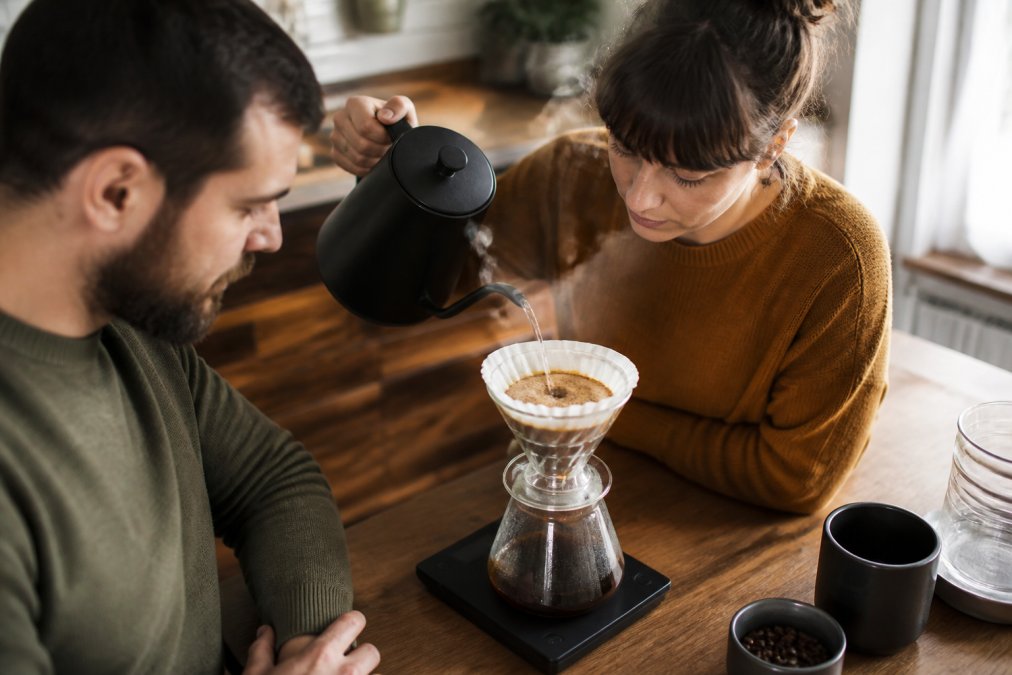
Pour about twice the coffee's weight in water and wait 30 seconds. The coffee bed will swell and bubble as trapped carbon dioxide escapes. Skip this and that gas blocks water from reaching the grounds evenly, which produces an inconsistent, hollow-tasting cup. After the bloom settles, pour the remaining water in slow circles, keeping the bed level and the pour steady.
Step 4: Brew, Taste, and Adjust for Extraction
Taste the cup and adjust one variable at a time. Total dissolved solids measure how much of the coffee actually made it into your cup, and your palate is the fastest way to read that number. Change one thing per brew, adjusting grind, temperature, and ratio together tells you nothing about which fix worked.
Learn to Taste Like a Cupper
Before you can fix a cup, you have to describe it. Professional cuppers break every coffee into a handful of attributes, and you can use the same framework at home:
- Acidity is the bright, juicy sensation, think citrus, berry, or green apple. It is not the same as sourness, which is a defect that reads as sharp and unpleasant.
- Body is the weight and texture on your tongue, from thin and tea-like to heavy and syrupy.
- Sweetness shows up as caramel, brown sugar, or fruit ripeness. It peaks when extraction is balanced.
- Aftertaste is what lingers after you swallow. A clean, sweet finish usually signals a well-extracted cup; a dry, papery one signals a problem.
Reading the Cup: What Each Flaw Tells You
- Sour, thin, salty: under-extracted. Grind finer or raise water temperature.
- Bitter, dry, harsh: over-extracted. Grind coarser or shorten brew time.
- Weak but not sour: too little coffee. Tighten your ratio toward 1:15.
- Muddy, unclear flavors: too much agitation or too fine a grind.
- Flat and papery: often a water chemistry issue, high alkalinity muting the acids, rather than a grind problem.
A Simple Tasting Log
Keep a notebook or a note on your phone and record four things for every brew: the coffee and roast date, the ratio, the water temperature, and one sentence on how it tasted. After a dozen entries you will start to see patterns, for example, that your grinder's "medium" setting consistently runs sour on light roasts, which tells you to go one step finer.
Best Coffee for Busy Mornings: Fast Methods That Still Taste Great
The AeroPress is the fastest route to a genuinely good cup, brewing in about 90 seconds with a fine grind and no pour-over finesse required. Cleanup takes seconds, and the paper micro-filter keeps grit out of the cup.
Common Mistakes That Ruin Specialty Coffee at Home
Most bad home coffee traces back to four habits. Fix these and your cup improves immediately.
- Grinding too far ahead. Ground coffee stales in hours, not weeks. Grind right before brewing.
- Eyeballing the ratio. A scale costs little and removes the biggest source of inconsistency.
- Using water straight from the tap. Chlorine and heavy mineral content flatten flavor.
- Never cleaning the gear. Old oils turn rancid and taint every subsequent brew.
Frequently Asked Questions
What makes a coffee a specialty coffee?
Specialty coffee is graded 80 points or higher on a 100-point scale by licensed Q graders, according to the Specialty Coffee Association. That score reflects bean quality, processing, and flavor clarity. It also requires traceability to a single origin or farm. Standard commercial coffee typically scores below 80 and is blended for consistency rather than flavor. When you brew specialty coffee, you are working with beans that have distinct tasting notes worth protecting through careful extraction.
What is the ideal coffee-to-water ratio for a balanced brew?
Start with 1:15 to 1:17, meaning 1 gram of coffee per 15 to 17 grams of water. A common starting point is 18 grams of coffee to 300 grams of water, which yields roughly a 10-ounce cup. If the cup tastes weak or sour, tighten the ratio toward 1:15. If it tastes bitter or harsh, loosen toward 1:17. Adjust one variable at a time so you know what changed the flavor.
Why is a burr grinder essential for specialty coffee?
A burr grinder crushes beans between two rotating burrs, producing uniform particles measured in microns. A blade grinder chops unevenly, creating both fine dust and coarse chunks. Those inconsistent particles extract at different rates, so you get bitterness and sourness in the same cup. Uniform grind size is the single biggest equipment upgrade for anyone learning how to brew specialty coffee at home, and it costs less than most people expect.
How does water temperature affect the flavor of specialty coffee?
Water between 195°F and 205°F extracts the full range of flavors without scorching the grounds. Below 195°F, under-extraction leaves the cup sour and thin. Above 205°F, over-extraction pulls harsh, bitter compounds. If you do not have a variable-temperature kettle, boil water and let it sit for 30 to 45 seconds before pouring. That pause lands you in the right range for most pour-over and immersion methods.
Brewing specialty coffee well takes practice, and the variables shift with every new bag of beans. Ridgeline Trail & Coffee stocks the gear that makes that process simpler, including the portable AeroPress Original, the induction-ready LAOION moka pot, and the Mr. Coffee 4-shot espresso maker with a built-in frother. Each one removes a variable so you can focus on grind and ratio. Search our coffee collection to find your next setup and start brewing better cups this week.