


How to Clean Your Coffee Maker Properly
Table of Contents
- Why Regular Coffee Maker Cleaning Matters
- How Often to Clean a Coffee Maker
- Basic Daily and Weekly Cleaning Steps
- How to Descale a Coffee Maker with Vinegar
- How to Clean a Coffee Maker with Vinegar Solution
- Using Coffee Maker Cleaning Tablets
- Cleaning Hidden Components and Preventing Mold
- Frequently Asked Questions
Last Updated: October 5, 2026
Why Regular Coffee Maker Cleaning Matters
Learning how to clean your coffee maker properly ensures it brews better coffee. Mineral buildup, old coffee residue, and mold change the flavor of every cup. At Ridgeline Trail & Coffee, we know serious coffee enthusiasts understand this: equipment matters as much as beans.
Regular cleaning extends your machine's life. Scale deposits force your coffee maker to work harder, shortening its lifespan and risking costly repairs.
A clean coffee maker is also safer. Mold thrives in warm, damp environments like your water reservoir and filter basket. Drinking mold-contaminated coffee is a health risk worth preventing.
Understanding how to clean your coffee maker properly is straightforward with basic supplies and a simple routine.
How Often to Clean a Coffee Maker
Cleaning frequency depends on how often you brew, your water hardness, and your machine type.
Usage-Based Routine Cleaning
If you brew daily, empty and rinse the carafe and filter basket after each use, and soak the filter basket weekly. For occasional users, a quick rinse after each brew and weekly soak is sufficient.
Water Hardness and Descaling Frequency
Water hardness is the biggest factor in descaling frequency. Hard water contains dissolved minerals that deposit scale inside your heating element and water lines.
Hard water (above 120 mg/L): Descale every month. You'll notice slower brew times and reduced water flow as scale builds up quickly.
Moderately hard water (61-120 mg/L): Descale every 6-8 weeks.
Soft water (below 60 mg/L): Descale every 2-3 months. Scale accumulates slowly, but mineral deposits still occur over time.
Test your water hardness with an inexpensive test strip from hardware stores, or contact your municipal water utility for their annual water quality report.
Machine-Type Considerations
Different coffee maker designs accumulate scale at different rates:
- Drip coffee makers: Standard descaling every 1-3 months works well for most users.
- Single-serve brewers (pod machines): These have smaller water lines and heating chambers, so they clog faster. Descale every 3-6 months even with soft water.
- Thermal-carafe models: The insulated carafe doesn't have a heating element, so descaling needs are less frequent, every 2-4 months, but the water reservoir still needs attention.
- Espresso machines: These run hotter and use more pressure, causing faster scale buildup. Descale every 2-4 weeks if you have hard water.
Warning Signs It's Time to Descale
Watch for these signals: slower water flow, longer brew times, unusual gurgling sounds, weak or bitter coffee, or white crusty deposits in the reservoir or around the heating element.
Checking Your Machine's Manual
Consult your coffee maker's manual for recommended descaling intervals and approved cleaning agents. Some machines have warranty terms requiring specific products or schedules. If you've lost the manual, search the brand name and model number plus "manual" online.
Basic Daily and Weekly Cleaning Steps
A quick daily routine prevents buildup before it becomes a problem.
Emptying and Rinsing the Carafe
Empty the carafe after every use and rinse with hot water. For stubborn stains, use a damp cloth with baking soda, then rinse thoroughly.
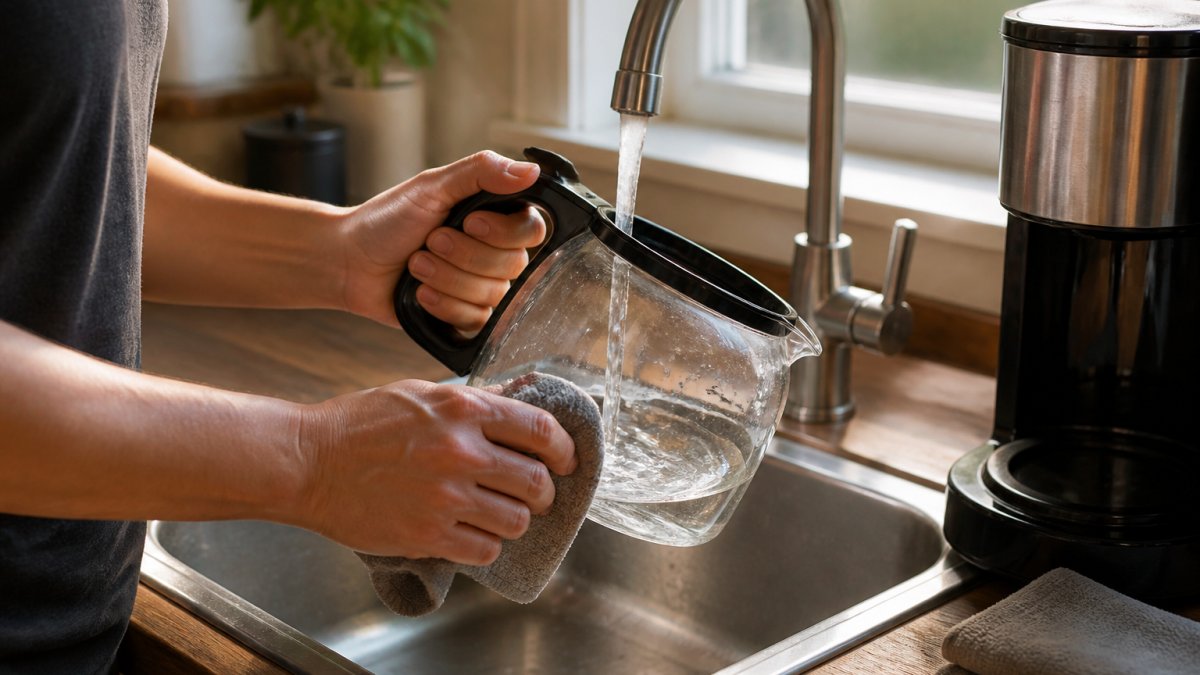
Cleaning the Filter Basket and Water Reservoir
Remove the filter basket after brewing and empty grounds. Rinse under hot water and wipe dry. Empty the water reservoir at day's end and rinse with hot water. Weekly, soak the filter basket in hot water, scrub gently with a soft brush, and rinse well.
Wiping the Exterior
Wipe the exterior weekly with a damp cloth, paying attention to the carafe platform and moisture-prone crevices. Use a microfiber cloth for stainless steel finishes.
How to Descale a Coffee Maker with Vinegar
White vinegar is the most effective and safest descaling solution. Fill your reservoir with equal parts vinegar and water, run a full brew cycle, let it sit 15 minutes, then run another cycle. Empty and rinse with two full cycles of fresh water only.
How to Clean a Coffee Maker with Vinegar Solution
The vinegar solution method works for most drip coffee makers. It's simple, affordable, and you probably have vinegar in your kitchen already.
Start with a clean carafe and empty filter basket. Fill the water reservoir with your equal-parts vinegar and water mixture. Place the empty carafe on the warming plate. Turn on your coffee maker and let it brew normally.
When the cycle finishes, don't empty the carafe yet. Let the solution sit for 15 to 20 minutes. This soaking time allows the vinegar to work on scale deposits inside the heating element and water lines.
Pour the vinegar solution from the carafe back into the reservoir. Run another full brew cycle. This second pass catches any remaining mineral deposits.
Now comes the crucial step: rinsing. Empty the carafe and reservoir completely. Refill the reservoir with fresh water only. Run a full cycle and discard the water. Repeat this rinsing cycle at least twice more. You want to make sure no vinegar taste or smell remains.
Your coffee maker is now descaled and ready to brew fresh, clean coffee.
Using Coffee Maker Cleaning Tablets
Cleaning tablets are a convenient alternative to vinegar, especially if you dislike the smell or prefer a measured, pre-formulated solution. However, they differ from vinegar in composition, residue, and suitability for different machine types.
How Cleaning Tablets Work
Most commercial descaling tablets contain citric acid or a proprietary blend of mild acids designed to dissolve mineral scale without damaging internal components. Unlike vinegar, which is acetic acid at 5% concentration, tablets are formulated to work at a specific dilution and pH. This precision makes them predictable and often gentler on seals and gaskets over repeated use.
Common brands include Dripkit, Dezcal, and Cafiza tablets, though many coffee maker manufacturers produce their own branded tablets. Check your machine's manual to see if the manufacturer recommends or requires a specific product.
Step-by-Step Tablet Descaling
- Empty your machine completely. Remove any remaining water from the reservoir and carafe.
- Drop one tablet into the water reservoir. Do not crush or dissolve it beforehand; it will dissolve as water fills the reservoir.
- Fill the reservoir with fresh, cold water to the maximum line. The tablet will dissolve as the water heats.
- Place an empty carafe on the warming plate. Do not insert a filter or grounds.
- Start a brew cycle. Let it run until about half the solution has brewed into the carafe.
- Pause the cycle (if your machine allows) or turn it off. Let the solution sit in the machine for 15-20 minutes. This soaking time allows the acid to work on scale deposits inside the heating element and water lines.
- Resume or restart the cycle to finish brewing the remaining solution into the carafe.
- Empty the carafe and reservoir. Do not reuse the cleaning solution.
- Refill the reservoir with fresh water only and run a complete brew cycle. Discard the water.
- Repeat the rinse cycle at least two more times. Some residue from the tablet may remain, and thorough rinsing prevents any chemical taste in your next cup of coffee.
Tablets vs. Vinegar: Key Differences
Smell: Tablets produce little to no odor, while vinegar leaves a strong smell that requires extra rinsing cycles to eliminate completely.
Residue: Vinegar is pure acetic acid and water; it leaves no solid residue. Tablets may leave a slight mineral residue depending on the brand and your water hardness. This is why the extra rinse cycles are important.
Material compatibility: Vinegar is safe for all coffee maker materials, including aluminum, stainless steel, and plastic. Some tablets contain ingredients that can be harsh on certain seals or gaskets if used too frequently. Check your machine's manual to confirm tablet safety.
Cost: A single vinegar descaling costs pennies. Tablets typically cost $0.50-$1.50 per use, making them more expensive over time but more convenient if you descale frequently.
Effectiveness: Both methods remove mineral scale equally well when used correctly. The choice is largely about preference and machine compatibility.
Machine-Type Compatibility
Drip coffee makers: Tablets work well and are safe for all standard materials.
Single-serve brewers: Check the manual first. Some pod machines have specific tablet requirements or restrictions. Using the wrong product can damage the needle or heating chamber.
Espresso machines: Commercial-grade espresso machines often require manufacturer-approved descalers. Vinegar is frequently recommended for home espresso machines because it's gentler on the group head gasket and portafilter seals. Tablets may be too harsh for frequent use.
Thermal-carafe models: Tablets work fine, but the insulated carafe means you won't smell residual odor as easily. Rinse thoroughly anyway.
Troubleshooting After Tablet Cleaning
Machine still smells chemical: You didn't rinse enough. Run two more full cycles with fresh water only, then brew a test cup and discard it.
Brew cycle is still slow: Scale may not have fully dissolved. Run another tablet cycle, or switch to vinegar for a second descaling attempt. If the problem persists, consult the manual or contact the manufacturer, internal blockage may require professional service.
Carafe or reservoir has white residue: This is tablet mineral content. Soak the carafe in hot water for 10 minutes and scrub gently with a soft brush, then rinse thoroughly.
Cleaning Hidden Components and Preventing Mold
The parts you don't see often need cleaning too. Inside your coffee maker, water flows through tubes and chambers that collect scale and mold.
If your machine has a removable water filter, take it out and rinse it under hot water weekly. Some filters can be soaked in hot water for a few minutes to loosen trapped minerals.
Mold prevention starts with drying. After each use, wipe out the water reservoir with a cloth. Don't leave water sitting inside overnight.
For machines with reusable filters, soak them in hot water once a week. This prevents coffee oils from building up and creating an environment where mold thrives.
If you notice mold growing inside despite regular cleaning, run a full descaling cycle with vinegar solution. The acidity kills mold. Then rinse thoroughly with multiple cycles of fresh water.
Keeping your coffee maker clean is one of the easiest ways to improve your daily coffee ritual. A simple weekly routine with basic cleaning and monthly descaling keeps your machine running well and your coffee tasting fresh.
Frequently Asked Questions
What is the best way to clean the inside of a coffee maker?
Start by emptying the water reservoir and removing the carafe and filter basket. Rinse these removable parts with fresh water. For the interior, run a brew cycle with a vinegar solution (equal parts white vinegar and water) to dissolve mineral buildup and residue. Let the machine cool, then run two full cycles with plain water to thoroughly rinse away any vinegar taste. Wipe the exterior with a damp cloth.
How often should you clean a coffee maker?
Daily rinsing of the carafe, filter basket, and water reservoir keeps your machine fresh. A deeper cleaning with vinegar solution or cleaning tablets should happen every 1-3 months, depending on your water hardness and how often you brew. Hard water requires more frequent descaling. If you notice slower brewing or weaker coffee flavor, descale immediately.
Can you clean a coffee maker with vinegar?
Yes. Mix equal parts white vinegar and fresh water, pour into the water reservoir, and run a full brew cycle. The vinegar dissolves mineral scale and buildup naturally. After the cycle completes, empty the carafe and run two more full cycles with plain water only to rinse thoroughly and remove any vinegar odor or taste from the next brew.
Is it better to clean a coffee maker with vinegar or baking soda?
White vinegar solution is the most effective for descaling mineral buildup because it dissolves scale chemically. Baking soda works better for scrubbing removable parts and removing stains from the carafe. For best results, use vinegar for the brew cycle to descale the internal components, then use a damp cloth with baking soda to scrub the carafe and filter basket. Coffee maker cleaning tablets are also effective if you prefer a dedicated product.