


How to Troubleshoot Bitter Tasting Coffee
Table of Contents
- What Causes Bitter Tasting Coffee
- How to Adjust Coffee Grind Size
- Ideal Water Temperature for Coffee Brewing
- Coffee Extraction Troubleshooting
- Roast Level and Bitterness
- Water Quality and Descaling Equipment
- Freshness and Storage of Coffee Beans
- Troubleshooting by Brew Method
- Frequently Asked Questions
Last Updated: September 27, 2026
What Causes Bitter Tasting Coffee
Bitter tasting coffee results from over-extraction, which pulls out harsh compounds. It's like steeping tea too long, prolonged contact intensifies bitterness.
The main culprits are water temperature that's too hot, grind size that's too fine, or brew time that's too long. Once you understand these causes, you can fix bitterness quickly.
Most people blame the beans when the real issue is technique. A quality coffee tastes terrible with wrong brewing methods; a decent coffee tastes great when you nail the variables.
Here's what to check first:
- Water temperature (should be 195-205°F for most methods)
- Grind size (coarser grinds brew faster)
- Brew time (shorter contact time reduces bitterness)
- Water quality (mineral content affects extraction)
How to Adjust Coffee Grind Size
Grind size controls water flow through grounds. Finer grinds extract faster; coarser grinds slow extraction. It's the easiest variable to adjust and often fixes bitter coffee immediately.
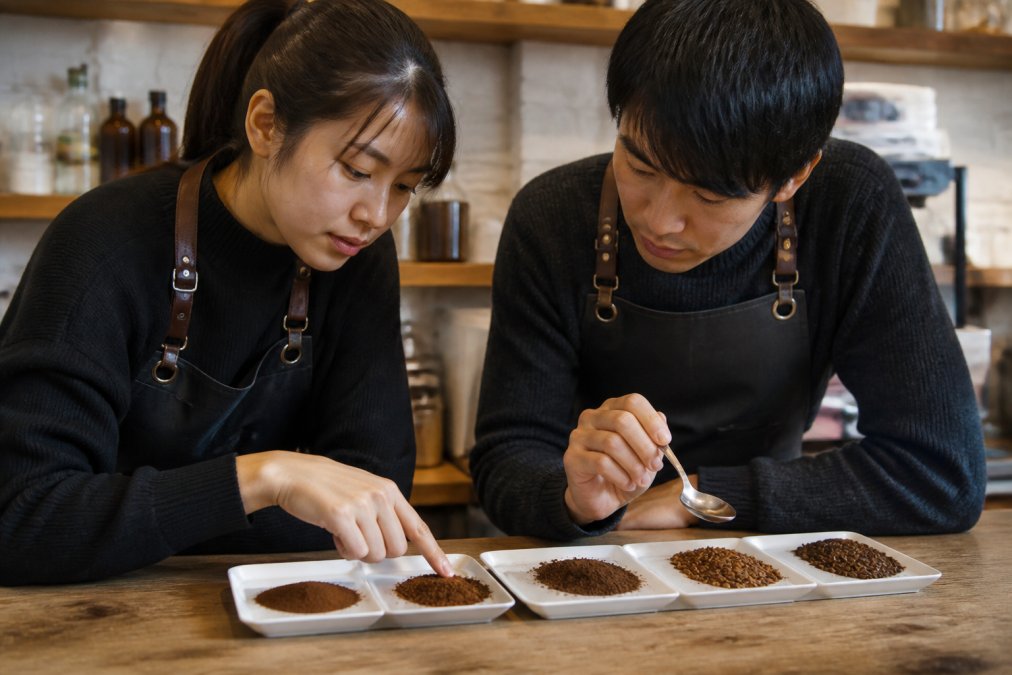
If your coffee tastes bitter, go coarser. Move your grinder up one or two notches, brew a test cup, and adjust again if needed. Most people dial in within 2-3 adjustments.
Grind Size and Extraction Time
A coarser grind reduces contact time, lowering extraction and bitter compounds.
Finer grind = longer extraction = more bitterness. Coarser grind = shorter extraction = less bitterness.
For drip, use medium grind. For French press, use coarse. For espresso, use fine. Adjust from there based on taste.
A quality burr grinder gives consistent results. The PRECISE28 Electric Burr Coffee Grinder offers 28 grind settings and automatic grinding for 2-12 cups, with full disassembly for cleaning.

Ideal Water Temperature for Coffee Brewing
Water temperature is critical. Too hot over-extracts; too cool under-extracts.
The sweet spot is 195-205°F. At 200°F, you get balanced extraction. Below 190°F, coffee tastes sour and weak. Above 210°F, it tastes bitter and harsh.
If using boiling water, let it cool 30 seconds after boiling. This simple step fixes bitter coffee for many people.
French press tolerates hotter water (steeping vs. flow-through). Drip makers work best near 200°F. Pour-overs are forgiving between 195-205°F.
Use a thermometer if you're serious about dialing in your brew. Cheap digital thermometers work fine. You'll see the difference immediately.
Coffee Extraction Troubleshooting
Extraction dissolves soluble compounds from grounds into water. Too little tastes sour; too much tastes bitter. The goal is balance.
Identifying Over-Extraction
Over-extracted coffee tastes harsh, dry, and unpleasant. You'll notice tannins, a drying sensation on your tongue, and a lingering unpleasant aftertaste.
Visually, over-extracted espresso has thin, weak crema. Over-extracted drip coffee looks darker and thinner than normal.
If you taste bitterness plus dryness, you're definitely over-extracting. This is the most common cause of bitter tasting coffee.
Adjusting Extraction Time and Yield
Shorter brew time reduces extraction and bitterness. Adjust based on your brew method.
For espresso: reduce shot time to 25-27 seconds. For drip: use coarser grind. For French press: reduce steeping to 3 minutes. For pour-over: pour faster or use coarser grind. Start with one change, brew a test cup, and adjust again if needed.
Roast Level and Bitterness
Darker roasts taste more bitter than light roasts due to roasted, caramelized flavors. This is chemistry, not brewing error.
Light roasts suit bright, acidic preferences. Dark roasts suit bold, heavy preferences. Neither is better, it's preference.
Dark roasts need gentler treatment: use slightly cooler water (195°F instead of 205°F) and shorter brew time to avoid harsh flavors.
Light roasts handle hotter water and longer brew time due to their acidity and brightness.
PRECISE28 Electric Burr Coffee Grinder →
Water Quality and Descaling Equipment
Water chemistry directly controls extraction speed and flavor balance. Understanding your water's mineral content (Total Dissolved Solids/TDS) is essential for consistent, non-bitter brews.
Understanding Water Chemistry and Extraction
Hard water (150+ ppm TDS) extracts faster; soft water (under 50 ppm TDS) extracts slower. The same grind and brew time produce different extraction depending on tap water.
The practical impact: If your water is hard and you follow a recipe designed for soft water, you'll over-extract and taste bitterness even with correct grind and temperature. Conversely, soft water may require a finer grind or longer brew time than the recipe suggests.
You can test your water's hardness with inexpensive test strips (available at hardware stores for $5-$10) or request a free water report from your municipal water utility. Most utilities publish these online or will mail one upon request.
Adjusting for hard water: Use a slightly coarser grind than your recipe calls for, or reduce brew time by 5-10 seconds. Start with one adjustment and taste before making another.
Adjusting for soft water: Use a slightly finer grind or extend brew time by 5-10 seconds. Again, test incrementally.
If your water is extremely hard or soft, a simple pitcher filter (like Brita) or a point-of-use filter can bring TDS into a more neutral range (80-150 ppm is ideal for most brewing methods). This single change often eliminates bitter coffee for people in high-mineral areas.
Descaling and Equipment Maintenance
Mineral buildup inside your equipment reduces water flow and changes extraction time, often pushing you toward over-extraction and bitterness. Limescale also traps old coffee oils, introducing stale, acrid flavors.
Descale every 2-3 months if you have hard water; every 3-6 months for soft water.
Freshness and Storage of Coffee Beans
Stale beans taste bitter and flat. Fresh beans taste bright and alive. Freshness matters more than roast level or origin.
Troubleshooting by Brew Method
Different brew methods have distinct failure points and adjustment levers. Knowing your method lets you troubleshoot faster and more accurately.
Drip Coffee Makers
Common bitter-coffee culprit: Grind too fine or brew time too long due to clogged filters.
Quick fixes:
- Use a medium grind (similar to sand texture). If bitter, go one notch coarser.
- Check your filter. A clogged or old filter slows water flow, extending brew time and over-extracting. Replace filters every 1-2 months or rinse reusable filters thoroughly after each use.
- Ensure water temperature is 195-205°F. If your machine brews hotter than 210°F (common in older models), let the water cool 30 seconds after boiling before pouring, or switch to a machine with temperature control.
- Descale your machine monthly if you have hard water. Mineral buildup restricts flow and extends brew time.
Pour-Over (Chemex, V60, Kalita Wave)
Common bitter-coffee culprit: Grind too fine or pouring technique traps water too long on the grounds.
Quick fixes:
- Use a medium-fine grind (slightly finer than drip). If bitter, go coarser.
- Pour in stages: wet the grounds first (30 seconds), then pour in slow, circular motions. Avoid letting water pool on top of the grounds; this extends contact time and over-extracts.
- Total brew time should be 3-4 minutes. If it's longer, your grind is too fine. If shorter than 2.5 minutes, it's too coarse.
- Use the correct filter type. Chemex filters are thicker than V60 filters; use the brand-specific filter to avoid unexpected flow rates.
French Press
Common bitter-coffee culprit: Grind too fine (metal filter doesn't catch fines) or steep time too long.
Quick fixes:
- Use a coarse grind (like breadcrumbs). Fine particles slip through the metal filter and over-extract, creating bitterness and sediment.
- Steep for 3.5-4 minutes, not longer. If bitter, reduce to 3 minutes.
- Stir after 1 minute to break the crust and ensure even extraction. Let it settle for 30 seconds before pressing.
- Press slowly and steadily over 20-30 seconds. Pressing too fast creates turbulence and can over-extract.
- Use water at 195-205°F. French press tolerates hotter water than drip because immersion is gentler than flow-through, but above 210°F still risks bitterness.
AeroPress
Common bitter-coffee culprit: Grind too fine or water too hot.
Quick fixes:
- Use a medium-fine grind (between drip and espresso fineness). If bitter, go coarser.
- Total brew time is 60 seconds. If bitter, reduce to 50 seconds or use coarser grounds.
- Water temperature: 195-205°F. If using boiling water, wait 30 seconds after boiling.
- Stir vigorously for 10 seconds after adding water to ensure even saturation.
- Press steadily over 20-30 seconds. A slow, controlled press extracts more evenly than a fast plunge.
Espresso
Common bitter-coffee culprit: Grind too fine, tamp too hard, or shot time too long (over 30 seconds).
Quick fixes:
- Target a shot time of 25-30 seconds (from first water contact to last drop). If the shot runs longer than 30 seconds, the grind is too fine or the tamp is too hard, go coarser first.
- Use consistent, level tamping pressure (about 30 pounds). Uneven tamping creates channeling (water rushing through weak spots), which under-extracts some grounds and over-extracts others, producing bitter, sour, or muddy shots.
- Grind fresh for each shot. Pre-ground espresso loses flavor within minutes.
- Purge the group head (run water through without a portafilter) for 2 seconds before inserting the portafilter. This clears old grounds and oils.
Frequently Asked Questions
What causes coffee to taste bitter?
Bitter tasting coffee usually results from over-extraction, where hot water pulls too many compounds from the grounds. This happens when grind size is too fine, water temperature is too high, or contact time is too long. Stale beans, hard water, or residue buildup in your equipment can also create bitterness. Start by checking your grind size and brew time as the first troubleshooting steps.
How does water temperature affect bitter coffee?
Water that's too hot accelerates extraction and pulls excessive tannins and bitter compounds from the grounds. Ideal water temperature for most brewing methods is 195-205°F. If your coffee tastes bitter, lower the temperature by 5 degrees and brew again. Temperature control is one of the fastest ways to eliminate bitterness without changing your grind or beans.
Does a finer grind make coffee more bitter?
Yes. Finer grounds increase surface area, speeding up extraction. More contact time between water and grounds means more bitterness. If your coffee tastes bitter, try a coarser grind setting. Most burr grinders offer 15-36 grind settings, so you can adjust incrementally. A coarser grind reduces extraction time and often eliminates bitterness immediately.
How do I fix bitter coffee without adding sugar?
Adjust your brewing method instead. Start by coarsening your grind, lowering water temperature to 195-200°F, and shortening brew time by 15-30 seconds. Clean your equipment and check bean freshness. If you use an espresso machine, reduce shot yield by pulling a shorter shot. For drip coffee, use a medium roast instead of dark roast. These changes address the root cause rather than masking the problem.