


Single Serve Coffee vs Drip Brewing: 2026 Guide
Table of Contents
- Single Serve Coffee vs Drip Brewing: How the Two Methods Differ
- How Drip Coffee Makers Work
- The Mechanics of Single-Serve Brewing
- Cost Per Cup: Pods vs Ground Coffee
- Drip Coffee Maker vs Single Serve Pros and Cons
- Best Coffee for Busy Mornings: What to Keep on Hand
- Maintaining Your Coffee Brewing Equipment
- Pods vs Grounds: Waste, Packaging, and Lifecycle Trade-Offs
- Freshness, Material Safety, and What Most Comparisons Skip
- Frequently Asked Questions
Last Updated: September 26, 2026
Single Serve Coffee vs Drip Brewing: How the Two Methods Differ
Single serve coffee versus drip brewing comes down to one trade-off: speed and consistency against volume and control. A pod brewer makes one cup in about a minute with almost no cleanup. A drip machine makes a full carafe in 8 to 12 minutes and rewards you with lower cost per cup. Most comparisons pick a winner and move on. That misses the point.
The right answer depends on how many cups you drink, how many people you brew for, and how much you care about dialing in flavor. This guide from Ridgeline Trail & Coffee breaks down the mechanics, the real cost per cup, the maintenance each machine demands, and the waste question most articles skip.
Below, we'll cover both methods side by side, plus the two factors almost nobody mentions: water temperature stability and how long your grounds have been sitting.
How Drip Coffee Makers Work
A drip coffee maker heats water in a reservoir, sends it up through a tube, and sprays it over coffee grounds sitting in a filter basket. Gravity does the rest. Water passes through the grounds, extracts flavor, and drops into a carafe below.
The brew cycle usually runs 8 to 12 minutes for a full pot. That slow saturation is an advantage: grounds get even contact with water, which produces a fuller extraction and more body in the cup. You control strength by adjusting the water-to-coffee ratio, usually 1 to 2 tablespoons of ground coffee per 6 ounces of water.
The catch is heat. Most drip machines hold water in a carafe on a warming plate, and that plate keeps cooking the coffee. After 20 minutes, the aromatic profile flattens and acidity sharpens. Brew only what you'll drink in the next half hour.
The Mechanics of Single-Serve Brewing
Single-serve brewing forces hot water through a sealed pod at pressure, producing one cup in roughly 60 to 90 seconds. The pod acts as both filter and coffee grounds, so there's no measuring, no filter basket to rinse, and no carafe to scrub.
That convenience factor is the whole product. You press a button, you get a consistent cup, and you walk away. The trade-off is control. You can't adjust the water-to-coffee ratio inside a sealed pod, so brew strength is mostly fixed. You can usually pick a cup size, which changes how much water passes through the same amount of coffee, but that's a blunt instrument.
Where pods do well is consistency. Every cup tastes like the last one because the dose, grind, and filter are identical every time.
Cost Per Cup: Pods vs Ground Coffee
Ground coffee wins on cost per cup, and it isn't close. A bag of ground coffee brewed in a drip machine typically lands in the range of a few cents to roughly a quarter per cup, depending on the roast and where you buy it. Pods run higher per serving because you're paying for packaging, sealing, and convenience.
Here's how our own pods break down:
| Product | Count | Price | Cost Per Cup |
|---|---|---|---|
| 12 Pack Single Serve Coffee Capsules | 12 capsules | $21.99 | About $1.83 |
| 60 Pack Single Serve Coffee Capsules | 60 capsules | $79.99 | About $1.33 |
| Mexico Coffee Pods | 12 pods | $24.99 | About $2.08 |
| Peru Coffee Pods | 12 pods | $24.99 | About $2.08 |
| Bali Coffee Pods | 12 pods | $24.99 | About $2.08 |
Buying the 60 pack drops your cost per cup noticeably versus the 12 pack. If you drink one pod a day, the bulk option pays for itself quickly. The single-origin pods cost more per cup because the green coffee itself costs more.

Drip still wins on pure economics. But if you're currently spending $40 a month on grocery-store coffee and dumping half of it, pods can actually come out even, because you brew exactly what you drink and throw nothing away.
Drip Coffee Maker vs Single Serve Pros and Cons
Drip coffee maker vs single serve pros and cons come down to volume, control, and cleanup. Drip gives you more cups for less money and full control over strength. Single serve gives you speed, consistency, and zero measuring.
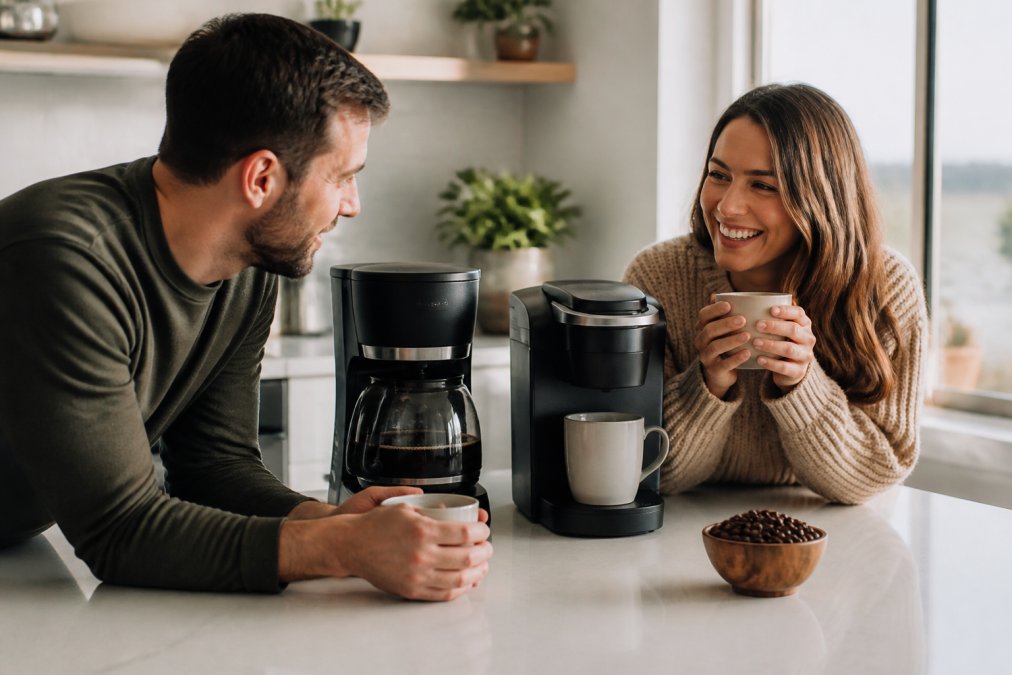
Drip coffee maker
Pros:
12 Pack Single Serve Coffee Capsules →
- Lowest cost per cup of any method
- Full control over water-to-coffee ratio and brew strength
- Brews 4 to 12 cups at once for households and offices
- Works with any ground coffee, including single-origin beans you grind yourself
Cons:
- Takes 8 to 12 minutes per pot
- Requires measuring, filters, and a carafe to wash
- Warming plate degrades flavor after about 20 minutes
- Wasted coffee if you brew more than you drink
Single-serve pod brewer
Pros:
- One cup in about a minute
- Identical results every time
- No measuring, no loose grounds, minimal cleanup
- Easy to offer variety, since each person picks their own pod
Cons:
- Higher cost per cup
- Limited control over brew strength
- Pod packaging creates waste unless you use a recyclable or reusable option
- Countertop footprint is similar, but you also need storage for pods
Flavor, Extraction, and Water Temperature Stability
Water temperature stability is the variable that separates good coffee from mediocre coffee, and it's the one most comparisons ignore. The widely cited target range for brewing is 195°F to 205°F. If water runs too cool, you get sour, under-extracted coffee. Too hot, and you scorch the grounds and pull out bitterness.
Drip machines vary widely here.
Best Coffee for Busy Mornings: What to Keep on Hand
The best coffee for busy mornings is whatever gets you out the door with a cup you actually want to drink. For most people, that means pods on weekdays and a drip pot on weekends, or one method that fits the schedule you actually keep.
Maintaining Your Coffee Brewing Equipment
Maintaining your coffee brewing equipment matters more than most people think, because residue buildup changes how your coffee tastes long before the machine stops working. Both methods need descaling, and both need it on a schedule.
Drip coffee maker:
- Rinse the filter basket and carafe daily
- Run a water-only brew cycle weekly to clear loose grounds
- Descale every 1 to 3 months, depending on water hardness
- Replace paper filters or wash permanent filters after every use
Single-serve pod brewer:
- Wipe the pod holder and drip tray daily
- Run a rinse cycle weekly
- Descale every 1 to 3 months with a descaling solution
- Check the needle assembly for grounds buildup if flow slows
Pods vs Grounds: Waste, Packaging, and Lifecycle Trade-Offs
Pods vs grounds is where the environmental footprint conversation usually goes wrong. The honest answer is that pod packaging creates more waste per cup than loose grounds, and that's a real cost. But the lifecycle picture is more complicated than "pods bad, grounds good."
Freshness, Material Safety, and What Most Comparisons Skip
Two things get skipped in nearly every single serve coffee versus drip brewing comparison: how fresh the coffee actually is, and what the hot water is touching.
Frequently Asked Questions
Which is better for making coffee, a single-serve brewer or a drip coffee maker?
It depends on how many cups you drink and how much time you have. A single-serve brewer wins for one or two quick cups, since there is no filter basket to rinse and no carafe to wash. A drip coffee maker wins when you need four or more cups at once, because the cost per cup drops sharply and you can brew a full carafe in one cycle. Many households keep both: drip for weekends and pod brewing for rushed weekday mornings.
What are the disadvantages of single serve coffee?
The main downsides are cost per cup and packaging waste. Pods typically cost more per serving than bulk ground coffee, and most capsules are not refillable, so they generate more trash unless you use a recyclable or reusable option. Single-serve also limits brew strength control on basic machines, and you cannot easily adjust the water-to-coffee ratio the way you can with a drip brewer and a scale.
Does drip coffee taste better than single serve pods?
Not automatically. Taste depends on the coffee itself, the water-to-coffee ratio, and brewing temperature. A drip maker with stale pre-ground coffee and a dirty carafe will taste flat next to a fresh, oxygen-sealed pod. A well-made single-origin pod such as a washed Chiapas or a medium-dark Bali can deliver a creamy body and clear tasting notes in under two minutes. Freshness and machine cleanliness matter more than the format.
How do I keep my coffee equipment working well long-term?
Descale both brewers every one to three months, depending on your water hardness. Rinse the drip filter basket and carafe daily, and run a plain water cycle through a pod brewer weekly to clear coffee oils from the needle. Replace paper filters or clean a reusable filter after every pot. Skipping descaling is the fastest way to lose brewing temperature, slow the flow rate, and shorten the life of either machine.